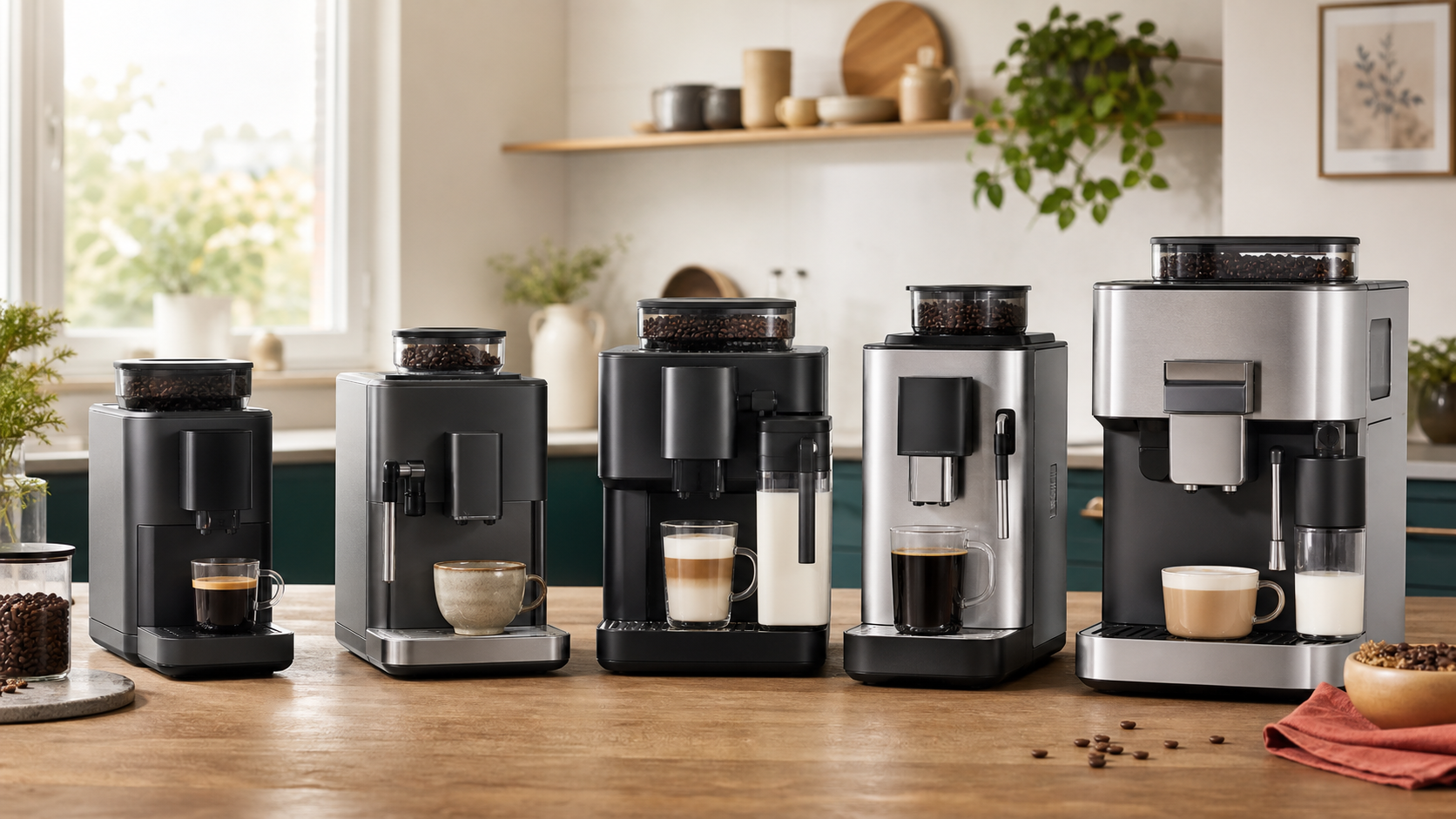
A bean-to-cup machine is bought for consistency and convenience, not for reproducing every variable of a manual espresso setup. The best models grind a measured dose, control extraction, texture milk and rinse themselves with minimal intervention. The worst create impressive menus while leaving the owner with awkward milk tubes, small drip trays and expensive cleaning routines.
We compared five machines currently represented on UK brand sites. This is a specification-led editorial assessment, not a claim that every machine was tested side by side. Official prices and availability were checked in August 2026 and will fluctuate.
Quick comparison
| Model | Milk system | Water tank | Reference price | Best for |
|---|---|---|---|---|
| De’Longhi Magnifica Plus ECAM320.60.B | LatteCrema carafe | 1.9L | £699.99 RRP | Best overall family machine |
| Philips 5500 LatteGo EP5546/70 | Two-part LatteGo | 1.8L | £649.99 | Easiest milk-system cleaning |
| Siemens EQ6 Plus TE651209GB | Milk hose, auto steam clean | 1.7L | £999 RRP | Two milk drinks at once |
| JURA E8 | Fine-foam milk system | 1.9L | £1,295 | Premium coffee quality and finish |
| Melitta Barista TS Smart | One-touch hose system | 1.8L | £999.99 | Two bean varieties and app control |
Best overall: De’Longhi Magnifica Plus. Fifteen drinks, four profiles and a colour touchscreen offer useful flexibility without entering ultra-premium pricing.
Easiest to live with: Philips 5500 LatteGo. Its milk container has no narrow internal tube and is quick to separate and rinse.
Best premium choice: JURA E8. Its grinder, interface and brewing options are aimed at the buyer who values refinement more than maximum features per pound.
1. De’Longhi Magnifica Plus — best overall
View the Magnifica Plus on the official De’Longhi website
The Magnifica Plus sits in the useful middle of De’Longhi’s range. Its 3.5-inch colour touchscreen presents 15 drinks, including espresso, long coffee, Americano, flat white, cappuccino and iced coffee. Four user profiles retain preferred strength, volume and milk settings, making it better suited to a shared household than a machine with one global favourite.
LatteCrema Hot automatically textures milk and lets the user choose three foam styles. The carafe can be refrigerated between uses, while a one-touch rinse cleans the immediate milk path. Removable dishwasher-safe components reduce effort, but “automatic cleaning” never means maintenance-free: the brew unit, drip tray, grounds container and milk carafe still require regular manual care.
The 1.9-litre tank and 250g-class hopper are appropriate for several daily users. At 24cm wide it is relatively narrow, but 44cm depth demands clearance to remove the tank and access service parts.
Pros: broad drink menu; four profiles; intuitive display; automatic milk textures; removable brew components.
Cons: carafe has more parts than Philips LatteGo; glossy surfaces show marks; price rises sharply outside promotions.
Best suited to: households wanting reliable one-touch black and milk drinks with individual profiles.
2. Philips 5500 LatteGo EP5546/70 — easiest milk cleaning
View the 5500 LatteGo EP5546/70 on the official Philips website
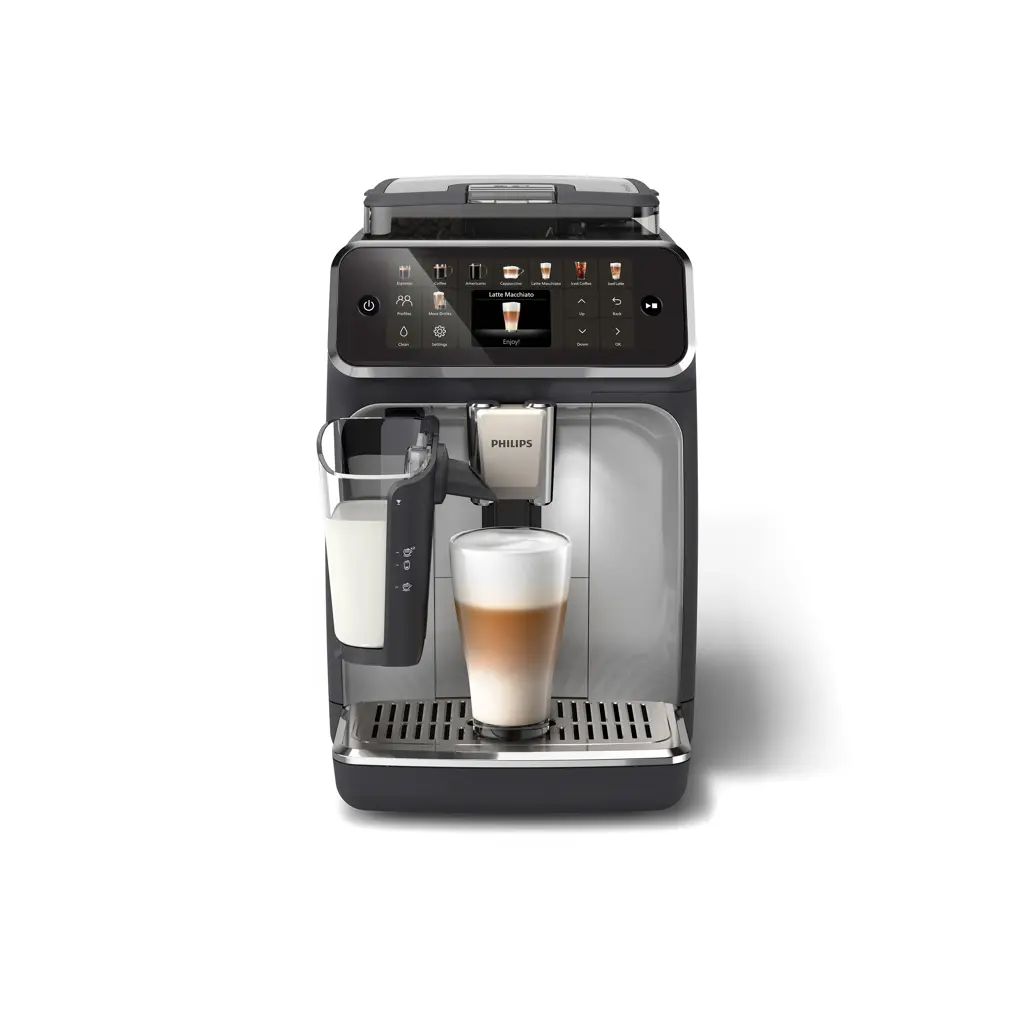
Philips’ reason to choose the 5500 is LatteGo. The milk container and spout join without a conventional flexible tube, so the parts can be separated, rinsed and reassembled quickly. For someone who makes daily cappuccinos but dislikes dismantling milk circuits, that advantage can outweigh marginal differences in espresso adjustment.
The machine lists 20 hot and iced beverages, four user profiles plus a guest profile, a ceramic grinder and a QuickStart function. SilentBrew is intended to reduce operating noise compared with older Philips models. Coffee strength, volume and milk quantity can be adjusted from the display.
Espresso enthusiasts should calibrate expectations. Superautomatic machines use compact brew groups and prioritise repeatability; bean freshness, grind setting and drink volume remain important. Very light roasts can be challenging, and changing the grinder should normally be done only while it is running, following the manual.
Pros: exceptionally simple milk container; extensive drink menu; user profiles; removable brew group; compact daily workflow.
Cons: many menu drinks are variations of the same core recipes; plastic-heavy construction; best results require initial dialling-in.
Best suited to: milk-drink households that place easy cleaning above luxury materials.
3. Siemens EQ6 Plus TE651209GB — best for two drinks
View the EQ6 Plus TE651209GB on the official Siemens website
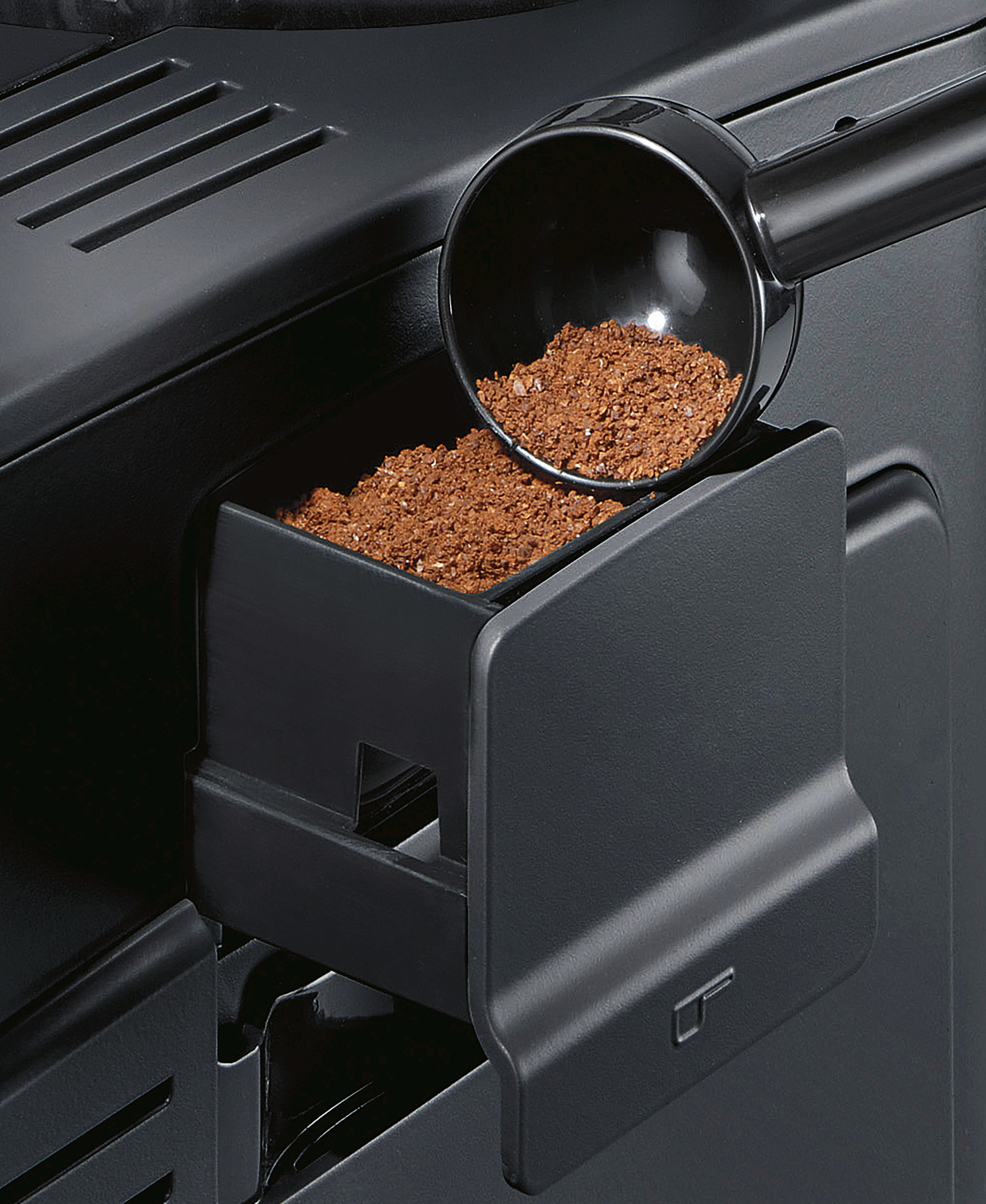
The EQ6 Plus combines a 1.7-litre tank, 300g bean hopper and ceramic grinder with Siemens’ coffeeSelect colour display. OneTouch DoubleCup can prepare two selected specialities together, including milk-based options, which is useful at breakfast. AromaDouble Shot uses two grinding and brewing cycles for a stronger drink while limiting over-extraction, and autoMilk Clean sends steam through the milk system after preparation.
The milk hose can draw directly from a container, offering flexibility but requiring disciplined cleaning. Automatic steam rinsing helps with residue inside the path; it does not replace cleaning the hose, outlet and external container. The 28.1cm width is manageable, although its 46.8cm depth is substantial.
The £999 list price is difficult to justify against discounted rivals, but Siemens frequently appears below RRP. At the right offer price, it is compelling for couples who regularly order the same milk drink together.
Pros: simultaneous two-cup preparation; ceramic grinder; clear interface; automatic milk-path steam rinse; 300g hopper.
Cons: deep chassis; milk hose needs care; value depends heavily on discounting.
Best suited to: couples and busy households preparing paired drinks.
4. JURA E8 — best premium machine
View the E8 on the official JURA website
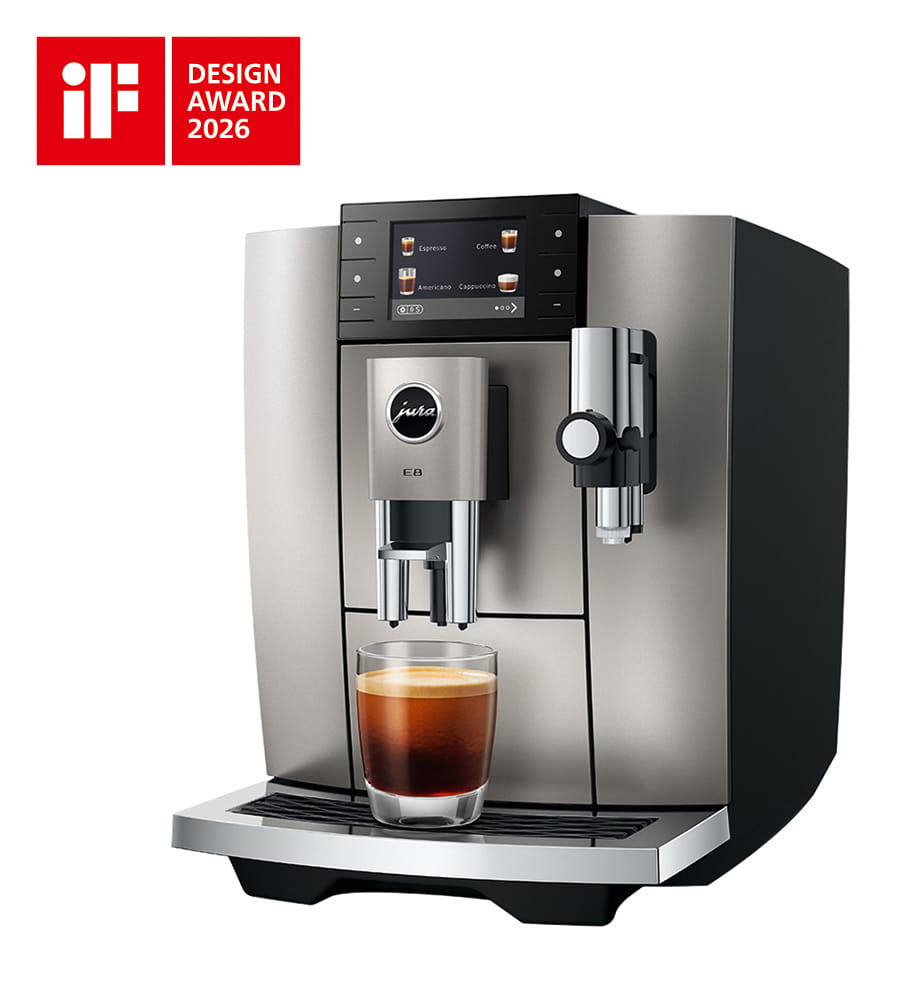
The fifth-generation E8 is JURA’s polished all-rounder. Its P.A.G.2 grinder, 3.5-inch display and dedicated coffee and cappuccino outlets target buyers who want a premium appliance rather than the longest recipe count. The current model adds Hot Brew, Light Brew and Sweet Foam approaches, with app-linked functions available through J.O.E. when the required connectivity accessory or configuration is present.
The 1.9-litre tank, 280g hopper and approximately 16-serving grounds container suit a serious coffee household. The machine is 27cm wide and 44.6cm deep. JURA uses guided cleaning programmes and a fixed brewing system; owners should budget for filters, cleaning tablets and milk-system cleaner rather than expecting to remove the brew unit for rinsing.
Its key weakness is value. At around £1,295, the E8 costs far more than a discounted Magnifica Plus or Philips 5500. The premium pays for finish, interface, grinder and brewing refinement—not double the practical convenience.
Pros: refined grinder and brewing platform; premium build; clear guided interface; strong black-coffee focus plus capable milk drinks.
Cons: expensive; proprietary cleaning consumables; fixed brew unit; milk container may be separate.
Best suited to: enthusiasts who want a premium automatic experience without moving to manual espresso.
5. Melitta Barista TS Smart — best for two bean types
View the Barista TS Smart on the official Melitta website
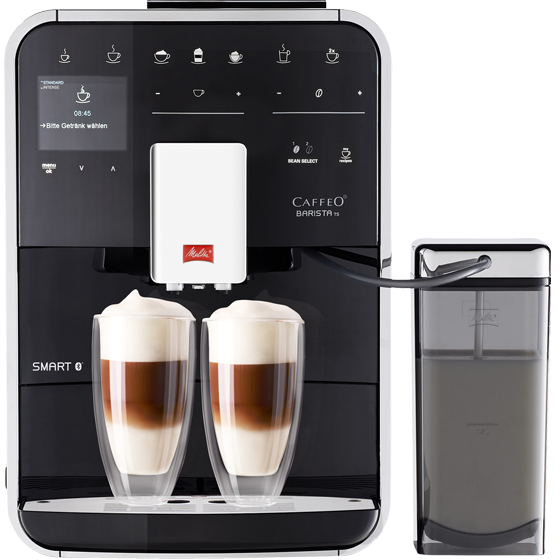
Melitta’s Barista TS Smart is unusually flexible for households that keep two beans. Automatic Bean Select chooses between chambers according to the recipe, while 21 drinks and eight My Coffee profiles accommodate different users. The Connect app can configure recipes and queue preparation steps from a phone.
The 1.8-litre tank is average, and the removable brewing group is reassuring for owners who prefer visual access during cleaning. A steel conical grinder and IntenseAroma option support further tuning. The interface and app are feature-rich, but that complexity may frustrate someone who wants only espresso and flat white.
Two bean chambers are useful, though no domestic grinder purges every trace when switching. Melitta acknowledges that minimal mixing can remain. Decaf-sensitive users should use the pre-ground chute rather than assume perfect separation.
Pros: dual bean chambers; 21 recipes; eight profiles; app control; removable brewing unit.
Cons: complex menus; milk hose cleaning; trace bean mixing; large feature set can feel excessive.
Best suited to: multi-user homes alternating between two bean styles.
How to choose
Start with your drinks
Black-coffee drinkers should prioritise grinder adjustment, brew control and easy access to espresso or long coffee. Milk-drink households should judge the cleaning workflow before recipe count. A system used twice daily must be easy enough to clean twice daily.
Budget for maintenance
Water filters, descaler, milk cleaner and cleaning tablets are normal ownership costs. Hard-water regions increase descaling demands. Use the machine’s hardness setting and manufacturer-approved process; vinegar can damage seals and leave flavour.
Check access around the machine
Measure depth with the drip tray extended and determine whether the tank lifts upwards or slides forwards. Low cupboards can make a top-filled hopper frustrating. Confirm the tallest cup that fits beneath the spout.
Do not chase pressure figures
Pump pressure is not the same as pressure at the coffee puck. Bean quality, grind, dose, temperature and extraction recipe matter more than whether the box advertises 15 or 19 bar.
Ownership costs and daily workflow
The purchase price is only the first useful comparison. A household making six milk drinks a day will empty the drip tray, fill the water tank and clean the milk system far more often than a single espresso drinker. Large tanks reduce refilling, but water left standing for days is not an advantage. Fresh water and clean contact surfaces matter to flavour.
Before buying, price the correct water filter, descaler, cleaning tablets and milk cleaner. JURA’s guided regime is polished but relies on branded consumables; Philips and De’Longhi allow the brew group to be removed and rinsed, though seals and moving parts still need periodic service. Melitta and Siemens introduce milk hoses that are flexible but easier to neglect than a visible carafe. A cheap machine that becomes unpleasant to clean is poor value because it will be used less often.
Electricity use is modest per drink compared with continuously heating a traditional boiler, but automatic rinse cycles consume water and fill the drip tray. Do not disable essential rinsing to save pennies. Instead, group drinks when practical, allow the machine to complete shutdown cleaning and use its energy-saving standby setting.
Getting better coffee from any automatic machine
Start with fresh, medium-roast beans and a recipe close to espresso proportions. Long watery drinks can over-extract one small puck; an Americano made by adding hot water to espresso often tastes cleaner. Adjust one variable at a time. If coffee runs quickly and tastes thin, move the grinder slightly finer; if it drips slowly and tastes harsh, go coarser. Make grinder changes in the manner specified by the manual.
Milk quality and temperature matter too. Cold milk gives an automatic frother more time to incorporate air before the drink becomes hot. Plant-based products vary dramatically; “barista” formulations normally create more stable foam. KitchenAid offers a dedicated plant mode, but the machines in this comparison can still work with alternatives after some experimentation and thorough cleaning.
Finally, do not store beans for months in a warm hopper. Add what will be used reasonably soon and keep the remainder sealed away from heat, light and moisture. The machine cannot restore aroma already lost from stale coffee.
Final verdict
The De’Longhi Magnifica Plus offers the best combination of profiles, drink choice and accessible pricing. Choose the Philips 5500 LatteGo when milk cleanup is the deciding factor, or the Siemens EQ6 Plus for paired drinks at a strong sale price. The JURA E8 is the premium connoisseur’s automatic, while the Melitta Barista TS Smart is uniquely useful for multiple users and two bean varieties.
Frequently asked questions
Can bean-to-cup machines make café-quality espresso?
They can make consistently enjoyable espresso-style drinks, but a skilled user with a separate grinder and manual machine has more control over dose, distribution and extraction.
Can oily beans be used?
Very oily or flavoured beans may cling in hoppers and stress grinders. Follow the manufacturer’s guidance and favour fresh medium roasts developed for automatic machines.
How long should a machine last?
Longevity depends on water treatment, cleaning and parts support. A removable or serviceable brew system, available seals and established repair network matter more than the number of recipes.
Product and image sources
About the author
Amelia Hart
Amelia is a fictional small-appliance editor who specialises in practical kitchen technology, energy-conscious cooking and value comparisons for UK households.