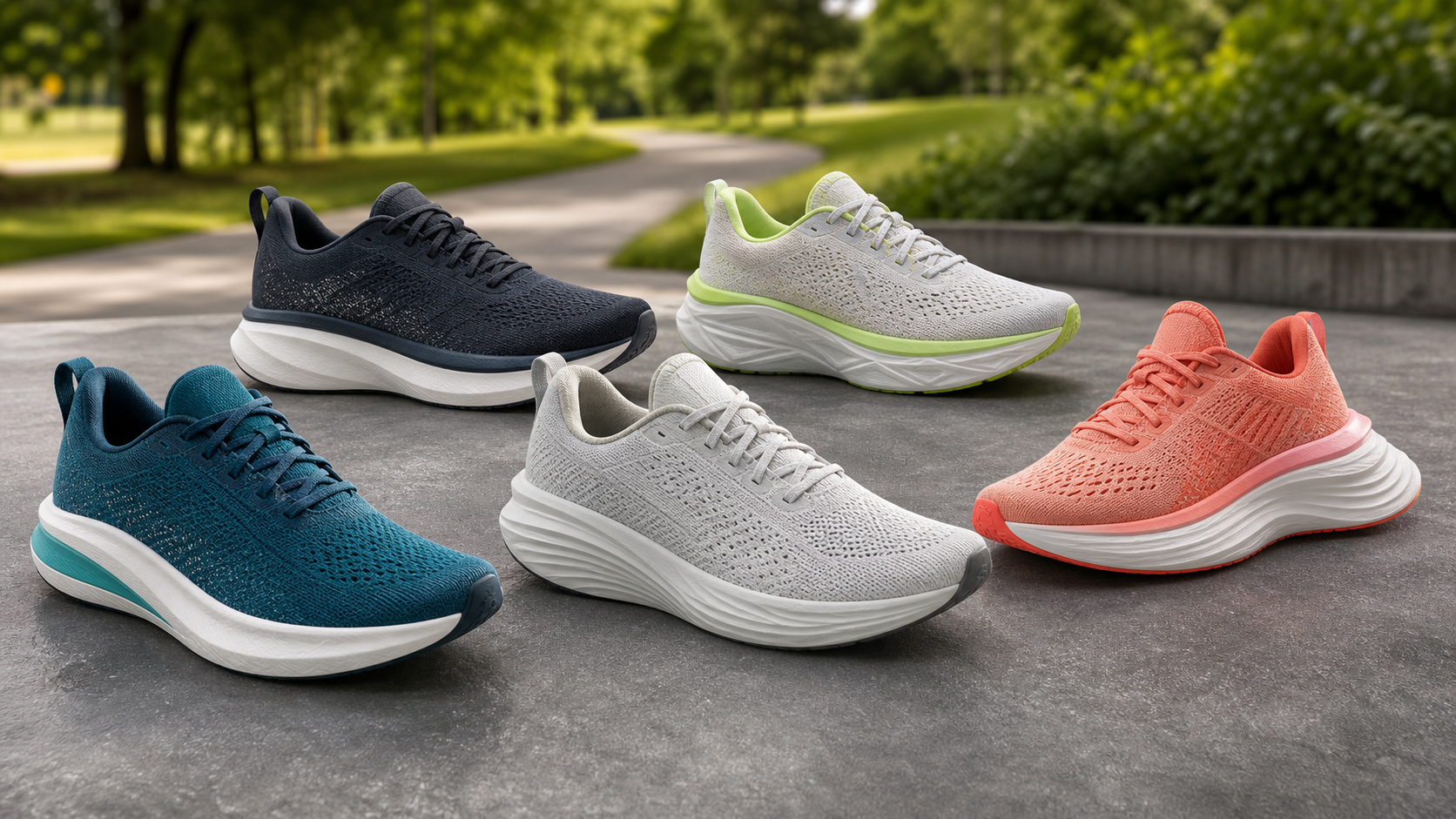
The most useful running shoe is not necessarily the softest or fastest. For most runners it is a dependable daily trainer: comfortable on easy miles, stable enough when form deteriorates and durable enough for regular road use. Five of the UK’s biggest footwear brands approach that brief differently, from Nike’s responsive Air Zoom platform to the softer, higher-stack ASICS Novablast.
This guide is an editorial, specification-led comparison of current UK models checked in August 2026. It does not replace an in-person fit assessment or claim that every shoe was laboratory-tested side by side. Feet, gait, training history and previous injury matter more than any universal ranking.
Quick comparison
| Shoe | Approx. men’s weight | Drop | Ride character | Best for |
|---|---|---|---|---|
| Nike Pegasus 42 | 300g (UK 9) | 10mm | Responsive, traditional | Best versatile all-rounder |
| adidas Supernova Rise 3 | 272g | 8mm | Soft, guided | Beginners and easy miles |
| ASICS Novablast 6 | Varies by size | Neutral daily geometry | Bouncy, cushioned | Best energetic cushioning |
| New Balance 1080v15 | 261g | 6mm | Soft, smooth | Long runs and wide-fit choice |
| Saucony Ride 19 | Varies by size | Daily-trainer geometry | Balanced, flexible | Best straightforward value |
Best overall: Nike Pegasus 42. It is not the lightest, but its durable outsole, full-length Air Zoom unit and familiar 10mm drop make it adaptable.
Best cushioned ride: ASICS Novablast 6. It is the most overtly lively option and suits runners who want an energetic easy-day shoe.
Best for fit options: New Balance 1080v15. Multiple widths and a softer long-run focus make it attractive when a standard last feels restrictive.
1. Nike Pegasus 42 — best overall
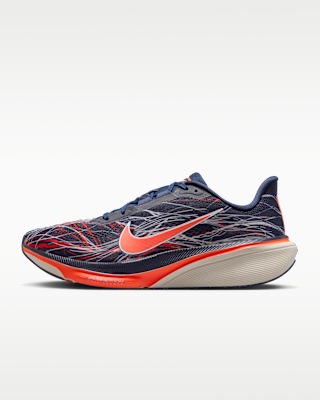
View the Pegasus 42 on the official Nike website
The Pegasus 42 updates Nike’s long-running workhorse with a curved, full-length Air Zoom unit inside a ReactX foam midsole. Nike also widened the forefoot compared with the previous generation and increased toe spring. At approximately 300g in a men’s UK 9, it is not a featherweight trainer, but the high-abrasion Waffle outsole is designed for repeated road mileage.
The 10mm drop and moderately responsive ride feel familiar to runners moving from conventional trainers. It can cover easy runs, steady efforts, treadmill sessions and everyday walking. The compromise is excitement: lighter tempo shoes feel quicker, while maximal shoes feel softer. That middle position is exactly why the Pegasus works as a one-pair rotation.
Pros: versatile ride; durable outsole coverage; roomier forefoot; responsive full-length Air Zoom; broad availability.
Cons: heavier than rivals; not a true stability shoe; neither maximal nor race-fast.
Best suited to: runners wanting one dependable shoe for varied weekly training.
2. adidas Supernova Rise 3 — best for beginners

View the Supernova Rise 3 on the official adidas website
The Supernova Rise 3 uses Dreamstrike+ cushioning with an 8mm drop and a 37mm heel/29mm forefoot stack in the referenced configuration. adidas quotes 272g and says the platform is 20% softer than the previous version. Supportive geometry and the Lighttraxion outsole aim to keep transitions controlled without turning the shoe into a firm corrective model.
That combination is well judged for newer runners and recovery days. The upper is comfortable enough for walking and gym use, broadening value beyond kilometres logged. Faster runners may find the softness less direct during intervals, and anyone needing medical-grade support should not mistake general guidance for a stability prescription.
Pros: forgiving cushioning; sensible 8mm drop; lighter than Pegasus; comfortable upper; approachable £130 reference price.
Cons: soft ride is less sharp at speed; colour availability changes; not intended to correct significant overpronation.
Best suited to: beginners, easy runs and mixed running/walking use.
3. ASICS Novablast 6 — best bouncy cushioning

View the Novablast 6 on the official ASICS website
The Novablast family is defined by a high, sculpted midsole and an energetic transition rather than a flat, traditional feel. The sixth generation continues as a neutral daily trainer, with a broad base intended to keep the bouncy ride manageable. Its £140 UK price places it directly against the latest Pegasus, Supernova and Ride.
The Novablast is appealing for runners who want easy miles to feel lively and cushioned. The geometry can also support long steady efforts. However, high-stack shoes change proprioception and cornering feel; runners coming from low, firm footwear should build mileage gradually. ASICS offers men’s and women’s versions, and fit should be judged in the intended sock with a thumb’s width ahead of the longest toe.
Pros: lively ride; generous cushioning; suitable from daily jogging to longer runs; visually distinctive platform.
Cons: higher stack may feel less grounded; not a dedicated stability shoe; soft/bouncy preference is personal.
Best suited to: neutral runners who want an energetic cushioned trainer.
4. New Balance 1080v15 — best for long-run comfort

View the 1080v15 on the official New Balance website
The 1080v15 introduces Infinion foam, which New Balance describes as delivering durable cushioning and energy return. The men’s model is listed at 261g with a 6mm drop, making it lighter and lower-drop than the Pegasus. A perforated mesh upper and several width options distinguish it in a market where “standard” varies significantly between brands.
Its softer character suits long easy runs and all-day wear. A 6mm drop is not extreme, but runners accustomed to 10–12mm footwear may notice extra calf and Achilles demand. Transition over several short sessions instead of debuting it on a long run. The same caution applies when changing to any different geometry.
Pros: soft long-run focus; relatively light; multiple widths; breathable upper; smooth neutral platform.
Cons: lower drop may require adaptation; softness can feel vague at faster pace; premium daily-trainer pricing.
Best suited to: long easy miles and runners underserved by standard widths.
5. Saucony Ride 19 — best balanced alternative
View the Ride 19 on the official Saucony website
Saucony’s Ride 19 is the quiet all-rounder. Reformulated PWRRUN+ foam is designed to feel softer and more responsive, while added flex grooves smooth the transition from walking pace through steady running. The engineered mesh stretches with the foot and the padded heel collar favours everyday comfort. Regular and wide versions are offered.
At a £140 list price but often appearing in seasonal colours below that figure, the Ride competes on balance rather than a signature gimmick. It can handle easy miles, long steady runs and moderate uptempo work. Runners seeking a highly rockered maximal sensation or plated propulsion should look elsewhere.
Pros: balanced cushioning; flexible transition; regular and wide fits; versatile training role; sale potential.
Cons: less distinctive than specialist shoes; exact weight varies by version; colour-dependent pricing can confuse comparisons.
Best suited to: runners who want a conventional, comfortable daily trainer with no major extremes.
How to choose a running shoe
Fit comes first
Try shoes late in the day when feet are slightly expanded. Check heel security, midfoot pressure and toe room while jogging, not only standing. UK sizing is not perfectly consistent across brands; use centimetre measurements as a starting point, then verify in person.
Match the shoe to the run
A daily trainer should cover most easy and steady mileage. Faster runners may add a lighter tempo or plated race shoe, while trail running requires an outsole and upper designed for uneven ground. Do not use a road shoe’s attractive tread as evidence that it is suitable for technical trails.
Rotate changes gradually
Foam, drop, rocker and stiffness alter load distribution. Introduce a new model through short easy runs, particularly when lowering drop or increasing stack height. Persistent pain is a reason to stop and seek qualified advice, not to “break in” the injury.
Best shoe by runner profile
New runner building consistency
The adidas Supernova Rise 3 is the most immediately forgiving recommendation, with an 8mm drop, soft Dreamstrike+ midsole and guided feel. Nike Pegasus 42 is the alternative for someone who prefers a firmer, more traditional transition. Beginners do not need the most expensive shoe, but they do benefit from a comfortable fit that makes regular training appealing.
Runner using one pair for everything
Pegasus 42 and Saucony Ride 19 occupy the useful middle. Both can handle easy miles, steady runs and occasional faster work without the instability or short lifespan sometimes associated with specialist racing shoes. Choose Nike for the more recognisable Air Zoom response and outsole coverage; choose Saucony for a smoother, less branded-feeling alternative and the possibility of discounted seasonal colours.
High-mileage easy and long runs
New Balance 1080v15 and ASICS Novablast 6 are the comfort-led options. The 1080’s 6mm drop and multiple widths favour fit customisation and long-run cruising. Novablast supplies more obvious bounce and a higher-platform sensation. Neither is automatically safer: comfort, gradual adaptation and sensible training load matter more than stack height.
Wide or high-volume feet
Start with New Balance or a Saucony wide version, but do not assume “wide” means identical. Some shoes add forefoot width while retaining a narrow heel; others increase volume through the midfoot. A runner with a wide forefoot and low-volume heel needs a different last from someone whose entire foot is broad. Lacing techniques can fine-tune pressure but cannot fix a fundamentally wrong shape.
Understanding cushioning, drop and support
Foam softness is not the same as cushioning performance. A very soft midsole may compress deeply but feel unstable, while a firmer platform can disperse load predictably. Energy-return percentages quoted by brands come from controlled material or shoe tests and do not translate directly into faster running for every athlete.
Heel-to-toe drop describes the difference in stack, not the absolute height. The 1080v15’s 6mm drop shifts loading differently from the Pegasus 42’s 10mm drop, but both can be highly cushioned. Runners with sensitive calves or Achilles tendons should be especially cautious when moving lower. Conversely, a higher drop does not cure injury.
“Neutral” also does not mean unstable. Modern neutral shoes often use broad soles, sidewalls and geometry to guide motion without a traditional medial post. If a shoe feels controlled and comfortable during the intended run, that practical response is more informative than a category label.
Value, rotation and replacement
Colour-specific discounts can make a previous or current daily trainer excellent value. Compare the exact generation and SKU because marketplace titles sometimes mix models. A genuine older shoe stored correctly can be worthwhile, but foam ages and return policies are important.
Rotating two suitable shoes may spread wear and offer different loading patterns, but it is not mandatory. Track discomfort, midsole creasing and outsole wear rather than replacing solely because an app reaches an arbitrary mileage. Uneven wear can reveal gait habits, yet it is not a diagnosis by itself.
Final verdict
The Nike Pegasus 42 is the safest all-round recommendation, while the adidas Supernova Rise 3 is especially welcoming for beginners. Choose ASICS Novablast 6 for bounce, New Balance 1080v15 for soft long-run comfort and width choice, or Saucony Ride 19 for a balanced alternative that often offers strong seasonal value.
Frequently asked questions
How many miles do running shoes last?
There is no fixed number. Body mass, gait, surface, foam and rotation all matter. Replace shoes when cushioning or stability has materially changed, the outsole is worn through, or new discomfort consistently appears.
Should running shoes be half a size larger?
Sometimes, but not automatically. The goal is secure heel and midfoot fit with space for toe splay and swelling. Compare foot length in centimetres with each brand’s chart.
Do beginners need stability shoes?
Not by default. Comfort and a stable-feeling base are useful, but pronation is normal. Persistent symptoms or known biomechanical issues deserve assessment by a qualified professional.
Product and image sources
About the author
Sophie Grant
Sophie is a fictional running-gear editor who evaluates footwear through fit, ride purpose, durability and value rather than trend alone.