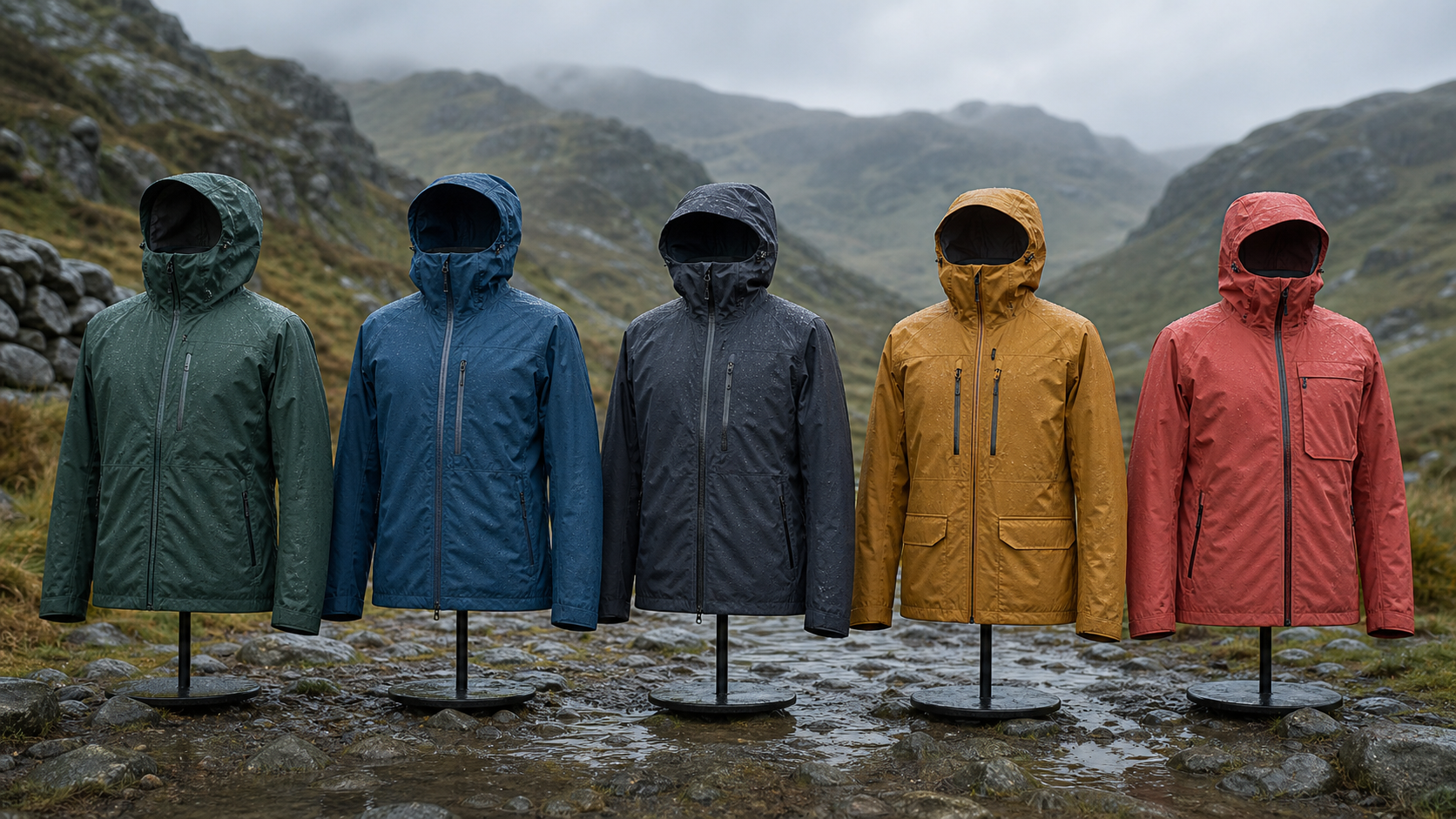
A waterproof jacket is a system, not a permanent force field. Membrane, seam tape, face fabric, durable water-repellent treatment, ventilation and fit all influence comfort. Even an expensive shell can feel wet inside when exertion exceeds its ability to move vapour, while an inexpensive jacket may be ideal for commuting if weight and helmet compatibility are irrelevant.
This guide compares five current UK shells using manufacturer specifications checked in August 2026. It is an editorial assessment rather than a claim of controlled rain-room testing. Choose for your activity and layering needs, then maintain the garment according to its care label.
Quick comparison
| Jacket | Construction | Weight | Reference price | Best for |
|---|---|---|---|---|
| Patagonia Torrentshell 3L | H2No 3-layer | 400g | £180 | Best everyday all-rounder |
| Rab Downpour Mountain | Pertex Shield 2.5-layer | 352.5g | £160 | Best hillwalking value |
| Berghaus Hillwalker 2.0 Interactive | GORE-TEX ePE 2-layer | Heavier walking shell | £225 | Layering and traditional fit |
| Montane Phase | GORE-TEX ePE 3-layer | Technical shell | Premium | Fast mountain use |
| Helly Hansen Verglas Infinity 2.0 | HELLY TECH Professional 3-layer | Technical shell | £350 | Severe-weather features |
Best overall: Patagonia Torrentshell 3L. It balances a durable three-layer build, pit zips, packability and an accessible price.
Best value for the hills: Rab Downpour Mountain. Its 20,000mm hydrostatic-head specification, mountain hood and pack-compatible pockets are impressive at £160.
Best severe-weather shell: Helly Hansen Verglas Infinity 2.0. Its helmet-compatible hood, RECCO reflector and harness-ready pocket layout justify the premium for technical users.
1. Patagonia Torrentshell 3L — best overall

View the Torrentshell 3L on the official Patagonia website
The Torrentshell’s appeal is restraint. Its H2No Performance Standard shell uses a 50-denier recycled nylon face, polycarbonate PU membrane and tricot backer. Patagonia states that the fabric, membrane and DWR finish are made without intentionally added PFAS. At 400g it is not an ultralight emergency layer, but the three-layer construction is better suited to frequent use than fragile minimalist shells.
Pit zips provide direct ventilation, the two-way-adjustable hood rolls down, and the jacket packs into its left hand pocket. A microfleece-lined neck reduces abrasion. The regular fit accepts a light fleece, though buyers planning a thick insulated layer should try the complete system.
Pros: durable three-layer build; pit zips; self-stowing pocket; practical hood; strong repair and environmental messaging.
Cons: 400g is heavy for racing; fabric can feel crisp; hand pockets may conflict with some hip belts.
Best suited to: commuting, travel and general hillwalking where durability matters more than minimum weight.
2. Rab Downpour Mountain — best-value hill shell
View the Downpour Mountain on the official Rab website
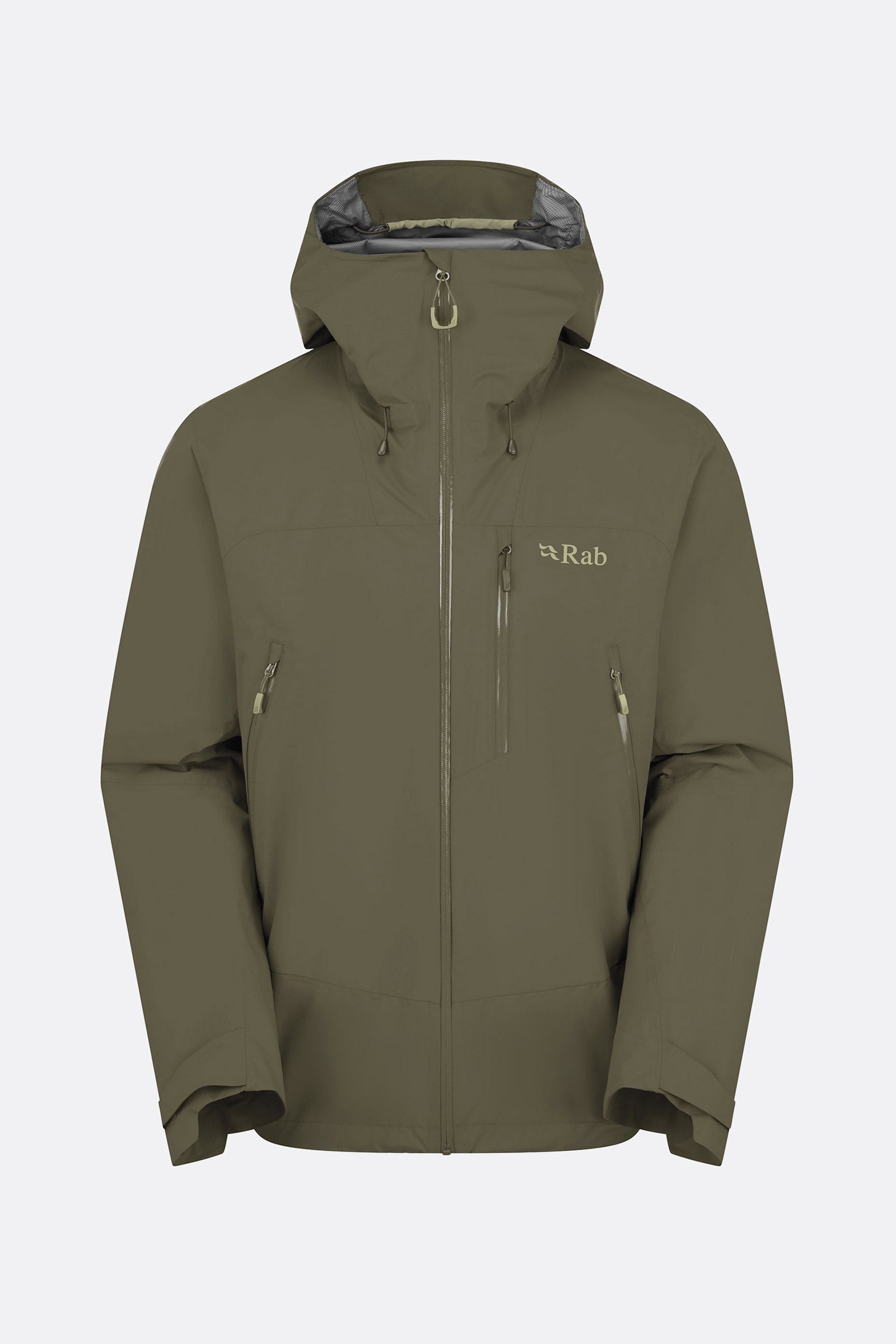
Rab gives the Downpour Mountain a genuine technical feature set at a mid-range price. Its 40-denier Pertex Shield 2.5-layer fabric is rated by Rab at 20,000mm hydrostatic head and 20,000g/m²/24h MVTR. The quoted men’s medium weight is 352.5g. A robust adjustable hood, AquaGuard front zip, articulated sleeves and underarm vents suit exposed walking and scrambling.
The A-line pockets remain accessible with a pack or harness, and extended cuffs integrate with gloves. A 2.5-layer fabric saves weight but places a printed or coated inner surface against clothing rather than using a full textile backer. It can feel clammy during sustained use and may be less comfortable against bare arms than a three-layer shell.
Pros: excellent specification for £160; proper mountain hood; pit zips; pack-friendly pockets; PFAS-free stated components.
Cons: 2.5-layer interior is less refined; regular fit needs checking with insulation; not as robust as heavier expedition shells.
Best suited to: UK hillwalkers who need credible storm features without a £300 budget.
3. Berghaus Hillwalker 2.0 Interactive — best for layering
View the Hillwalker 2.0 Interactive on the official Berghaus website
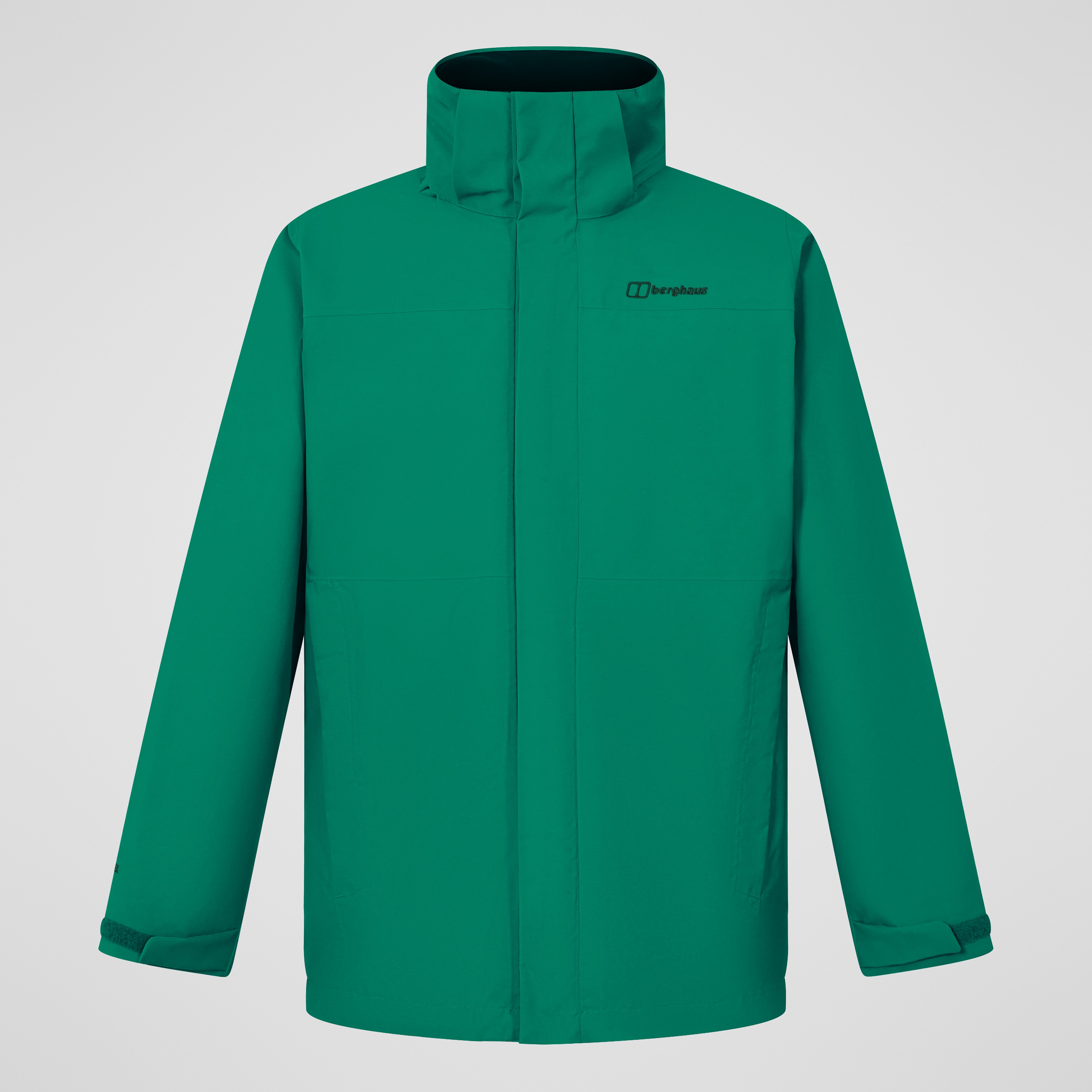
The Hillwalker 2.0 is a traditional walking jacket updated with a two-layer GORE-TEX ePE fabric described as waterproof, breathable and PFAS-free. Its InterActive front zip accepts compatible Berghaus fleeces, turning separate garments into a linked cold-weather system. A roll-away hood, storm flap, zipped hand pockets and adjustable cuffs favour practical countryside use over minimalist styling.
Two-layer construction normally needs a separate lining or protection for the membrane, increasing bulk compared with a stripped-back 2.5-layer shell. The advantage is comfort and a less technical feel for everyday wear. The longer, roomier cut works over midlayers but can be excessive for running or fast scrambling.
Pros: comfortable walking-oriented design; GORE-TEX ePE protection; compatible fleece integration; storm flap; useful everyday pockets.
Cons: bulkier than Rab or Montane; roll-away hood is less technical than a helmet-ready design; fleece compatibility has value only within the Berghaus system.
Best suited to: walkers wanting a conventional shell that layers neatly for cold, wet days.
4. Montane Phase — best for fast mountain use
View the Phase waterproof jacket on the official Montane website
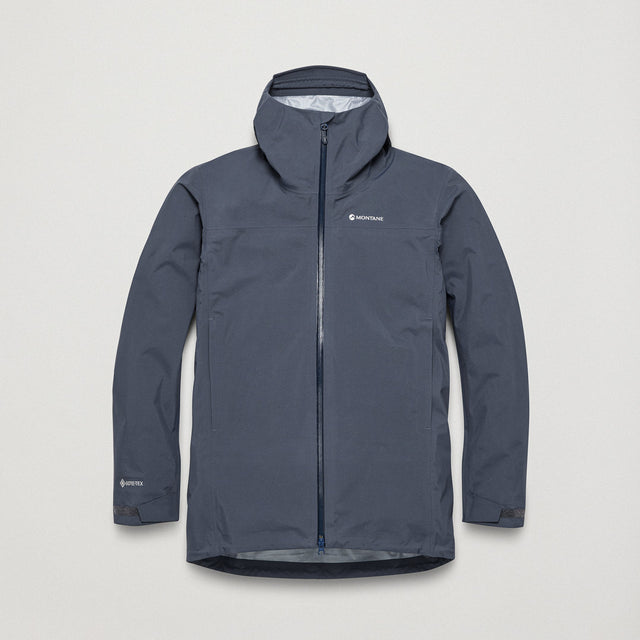
Montane’s Phase uses a three-layer GORE-TEX ePE Performance shell with a quoted 28,000mm hydrostatic head and RET below 13. The PIVOT 2 hood, pit zips, extended body and pack-compatible pockets are arranged for active mountain use. Bonded pocket and zip construction reduces seam bulk, while Montane says its revised pattern removes unnecessary seam tape to improve breathability without losing protection.
This is the jacket for someone who notices hood articulation, pocket height and ventilation while moving quickly. Those details cost more and deliver little benefit on a short dog walk. The technical cut should be tried with the exact insulation and pack intended for use.
Pros: high waterproof specification; three-layer ePE membrane; pit zips; technical adjustable hood; pack-compatible layout.
Cons: premium price; technical fit is less casual; bonded construction should be repaired by specialists.
Best suited to: experienced hikers and mountaineers moving hard in prolonged poor weather.
5. Helly Hansen Verglas Infinity Shell 2.0 — best severe-weather features

View the Verglas Infinity Shell 2.0 on the official Helly Hansen website
The Verglas Infinity 2.0 is a three-layer shell for hiking, mountaineering and ski touring. HELLY TECH Professional and LIFA Infinity provide the weather barrier, while underarm zips manage heat. The hood is helmet-compatible, pockets are positioned for packs and harnesses, and a RECCO reflector helps compatible rescue systems locate the garment in relevant emergencies.
Fully sealed seams, ripstop fabric, articulated sleeves and adjustable hood, hem and cuffs create a comprehensive mountain package. Helly Hansen rates its windproofness and breathability at the top of its own six-point scale, though brand-specific scales should not be used for direct laboratory comparison with another manufacturer.
At £350, this is overkill for urban rain. RECCO is not a substitute for navigation, communication or avalanche equipment, and a premium membrane still needs cleaning and DWR care.
Pros: complete technical feature set; helmet and harness compatibility; mechanical ventilation; RECCO reflector; recycled-content certification.
Cons: expensive; more features and fabric than casual users need; technical appearance and fit.
Best suited to: mountaineering, ski touring and exposed multi-season use.
How to choose a waterproof jacket
Match construction to frequency
Two-layer shells are comfortable and often durable but bulky. A 2.5-layer jacket is light and packable, while a three-layer shell generally offers the best balance for frequent hard use. Fabric denier and construction details matter alongside layer count.
Ventilation is not optional during exertion
Breathability tests describe controlled conditions. In humid UK weather, pit zips and front-zip adjustment often move moisture faster than diffusion through a membrane. Wear a wicking base layer and avoid cotton for sustained outdoor activity.
Fit the hood and cuffs
Turn your head fully with the hood tightened; it should follow without blocking vision. Check that cuffs seal over or under gloves and that the hem stays covered when reaching. Technical hoods can overwhelm casual use, while small fashion hoods fail in wind.
Maintain water repellency
When the face fabric wets out, the membrane may remain waterproof but breathability and comfort decline. Wash with the recommended technical cleaner, rinse thoroughly and restore DWR according to the label. Do not assume dirt protects a jacket—it blocks performance.
Best jacket by use case
Daily commuting and travel
Patagonia Torrentshell is the easiest recommendation. It looks restrained, packs into a pocket and has vents for warm train platforms or brisk walks. Its 50-denier face should tolerate regular backpack straps better than an ultralight race shell. The Berghaus Hillwalker is warmer-feeling and more traditional, but bulkier to carry when the forecast clears.
Three-season hillwalking
Rab Downpour Mountain offers the strongest feature-to-price ratio. Its hood, cuffs, pocket placement and pit zips are designed around movement with a pack. The 2.5-layer interior is the trade-off. Frequent users who wear a shell for hours at a time may prefer the textile-backed comfort and durability of Patagonia or a premium three-layer Montane.
Fast hiking and scrambling
Montane Phase earns its cost when low seam bulk, articulated fit and precise hood adjustment are noticeable. It is not automatically more waterproof in the real world than a correctly maintained cheaper jacket, but its pattern and ventilation are better aligned with sustained effort. Try reaching overhead and wearing a loaded pack during fitting.
Winter mountaineering and ski touring
Helly Hansen Verglas Infinity 2.0 has the most relevant hardware: helmet-compatible hood, harness-aware pockets, ripstop fabric, RECCO reflector and full adjustment. Those features add cost and bulk but are purposeful in exposed terrain. None replaces route planning, emergency equipment or the skill to turn back.
Waterproof ratings without the marketing fog
Hydrostatic head measures how tall a column of water a fabric resists before leakage in a standard test. Rab publishes 20,000mm and Montane 28,000mm for the products here, but numbers from different constructions and test contexts are not the entire garment. Stitch holes must be taped, zips need protection and cuffs must close effectively.
Breathability is even harder to compare. MVTR reports mass of vapour moved over time; RET reports resistance to evaporative heat transfer, where lower is generally more breathable. Results depend on the test method. Helly Hansen’s six-point scale is useful within its range but not numerically equivalent to Rab’s MVTR figure.
In practice, condensation is managed through pace, layers and mechanical ventilation. A shell worn over cotton will feel damp sooner because cotton retains moisture. A lightweight synthetic or merino base layer moves sweat away from skin, while pit zips dump heat before the inside becomes saturated.
Fit, layering and women’s versions
This comparison uses men’s reference models because their specifications and source images were readily comparable, but each brand offers women’s waterproof ranges with different patterning and sometimes different weights. Do not simply size down a men’s shell if shoulder, hip or sleeve proportions are wrong.
Fit with the thickest realistic midlayer. The hem should cover the waist belt area, sleeves should protect raised wrists and the hood should tighten without pulling the jacket body upward. Excess volume pumps warm air out and flaps in wind; too little volume compresses insulation and restricts movement.
Final verdict
The Patagonia Torrentshell 3L is the best all-round UK shell for everyday wear and regular walking. The Rab Downpour Mountain delivers the strongest value for hill use, while the Berghaus Hillwalker 2.0 suits traditional layered walking. Choose the Montane Phase for fast technical movement and the Helly Hansen Verglas Infinity 2.0 when helmet, harness and severe-weather features are genuinely required.
Frequently asked questions
Is a higher hydrostatic-head number always better?
No. It measures resistance to water pressure under a defined test, not comfort, fit or durability. Seam quality, ventilation and the condition of the face fabric also matter.
Why does a waterproof jacket feel wet inside?
Condensation can build when sweat production exceeds vapour transfer, especially in humid weather. Ventilation and appropriate base layers help. Inspect seams and fabric if moisture consistently appears in the same external-exposure area.
Can a shell be repaired?
Small tears can often be patched with compatible repair tape; seam or delamination problems may need the brand or a specialist. Check warranty and repair services before attempting permanent adhesive fixes.
Product and image sources
About the author
Daniel Mercer
Daniel is a fictional outdoor-gear editor focused on practical layering, weather protection, repairability and honest feature comparisons.